Showing posts with label Urban nature. Show all posts
Wednesday, January 28, 2015
My interview with Juliet Kemp in Urban Farms Magazine
Permaculture isn't just for those with vast garden spaces, according to Juliet Kemp, author of Permaculture in Pots, and she's quite right. In the January/February, 2015 issue of Urban Farms Magazine I talk with Kemp about turning balconies, window sills, and back patios into productive permaculture havens and why it matters. You'll have to buy the magazine, but it's worth every cent!
Thursday, January 30, 2014
Thursday Snapshot: Ice Needles in the Garden
| Ice needles in the garden. |
Wednesday, January 22, 2014
My Review of Edible Cities at Permaculture Magazine
Living and farming as I do in one of the world's largest cities, I am instantly drawn to books that discuss innovative ways to grow food in an urban environment. And now that I'm preparing to move to a place where my garden will be as much on my balcony as it will be in the backyard, I'm even more interested. So, it was with great pleasure that I found a review copy of Edible Cities: Urban Permaculture for Gardens, Yards, Balconies, Rooftops and Beyond by Judith Anger, Immo Fiebrig, and Martin Schynder waiting for me. What did I think? Well, read the review at Permaculture Magazine and find out!
Monday, May 14, 2012
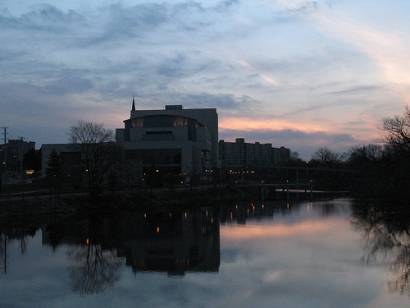
Guelph, Ontario: A Tale of Two Rivers
![]() |
| River Run Centre, Guelph, Ontario. Courtesy V. Waffle, 2007. |
![]() |
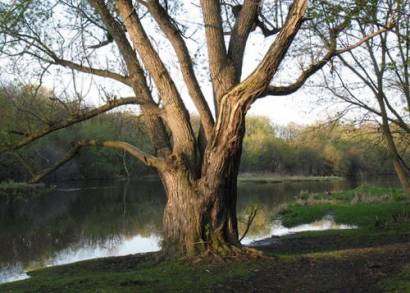
| Old Man Willow, 2008. Photo courtesy of V. Waffle. |
At the confluence of the Speed and Eramosa Rivers, the city was founded in 1827. They played an essential role in early economy. Tanneries, wool mills and breweries dotted their banks during the 19th Century. Two serious floods during the early 20th Century led the city to fill wetlands in a misguided effort to control water flow. Some 1920s floodwalls remain a distinctive feature of Royal City Park.
To my mind, the two rivers have distinct personalities. The Speed River, which coils around the heart of downtown, is subject to more management. It is at times strong and brash, at others broad and civilized. Its tributary, the Eramosa River, is more introverted. Slow and dark, it maintains a steady pace. Its mature trees and lush understory invite meditation and confer solace.
Guelph Lake reservoir was built upstream in 1974 to manage Speed River water levels more effectively. Consistent outflow during the drier summer months dilutes sewage and runoff. Hillside Festival, one of Canada’s outstanding summer music events, takes place at Guelph Lake Conservation Area the last weekend of July.
The riverside factories are long gone. By the 1980s and even before, community action focused on cleaning the floodplains and building public parks. Ontario Public Research Interest Group (OPIRG) of Guelph organized weekend cleanups and, beginning in 1988, spearheaded extensive naturalization programs. The city adopted a management plan that bans chemicals alongside the rivers. It maintains areas useful to the community while fostering biodiversity.
This amounts to remarkable green space running through the city core. Public bicycle and walking trails run along both rivers, usually on both sides. It is possible to hike across the entire city via parks. The character of these areas has changed significantly since I started university here in 1982. Some high-maintenance lawns have literally turned to woodland in 25 years. Royal City Park manifests an Old World feel, while Eramosa woodlands present an illusion of being far from any city. The river system provides valuable habitat for wildlife and native plants, as well as a migration corridor for birds.
It seems environmental action has recently received bad raps from unexpected quarters. Guelph’s progressive policies are not exempt. Proposed changes to the city’s official plan could open certain river areas to development. It is bewildering that something so many residents value could come under threat. Community action made these parks what they are today. Hopefully similar foresight will protect and improve them.
~~~~~~
Van Waffle is a Canadian writer. He blogs about urban nature at Speed River Journal: www.vanwaffle.com
Subscribe to:
Posts (Atom)